
Perth Battery Rebates 2026: Why Installing Before 1 January 2027 Could Save You More
The federal battery discount drops again on 1 January 2027. Here is what Perth households on Synergy can claim right now, what changes in 11 weeks, and how to size a battery for WA's 3pm - 9pm peak.
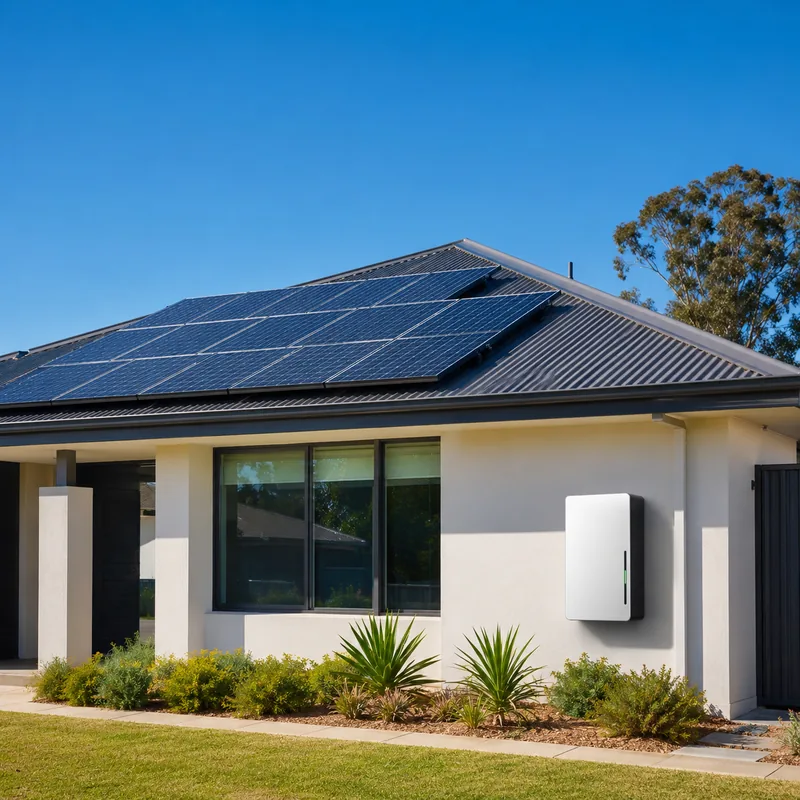
If you have been weighing up a home battery, the last quarter of 2026 is an important time to look at Perth battery rebates, because the federal part of the discount drops on 1 January 2027. Perth homeowners can currently stack two incentives: the WA Residential Battery Scheme (up to $1,300 for Synergy customers, plus a no-interest loan option) and the federal Cheaper Home Batteries Program, which pays a discount through small-scale technology certificates (STCs). The federal discount is calculated by an "STC factor" that now steps down every six months, and the next cut lands on 1 January 2027.
In this guide to Perth battery rebates we unpack the official numbers, show what they mean for typical battery sizes, and explain why Synergy's time-of-day pricing makes storage more valuable in Perth than ever.
Perth battery rebates: the two incentives side by side
Both programs reward the usable capacity of a new battery, and both are typically delivered as an upfront discount on your quote, so you don't have to claim them yourself. Your accredited installer applies on your behalf.
| Feature | WA Residential Battery Scheme | Federal Cheaper Home Batteries |
|---|---|---|
| Who runs it | WA Government (Energy Policy WA), administered by Plenti | Australian Government via the Small-scale Renewable Energy Scheme |
| Value | $130/kWh, max $1,300 (Synergy) $380/kWh, max $3,800 (Horizon Power) | STCs per usable kWh; aims for ~30% off upfront cost |
| Minimum size | 5 kWh usable | 5 kWh (systems up to 100 kWh eligible) |
| Capacity cap | Rebate capped at 10 kWh | STCs on first 50 kWh, tapered above 14 kWh |
| Key condition | Must join a retailer VPP (e.g. Synergy Battery Rewards) or a WA-approved alternative VPP | CEC-approved battery, VPP-capable inverter, installed by an SAA-accredited installer with battery endorsement |
| Extras | No-interest loan of $2,001 - $10,000 over up to 10 years for households earning under $210,000 | Factor declines every 6 months until 2030 |
| Availability | Until 100,000 rebates are paid (expected to 2027) | Set by installation date, not contract date |
Sources: WA Government Energy Policy WA; Clean Energy Regulator; DCCEEW (see list below).
The Clean Energy Regulator is clear that federal battery rebates are set by the installation date, not the date you sign your contract. A battery signed in December but installed in January will get the lower 2027 factor.
How much is the federal discount falling?
Since 1 May 2026 the STC factor tapers by size: the first 14 kWh earn 100% of the factor, each kWh from 14 to 28 earns 60%, and each kWh from 28 to 50 earns 15%. Then the factor itself steps down twice a year. Here is the official schedule:
What that means for common battery sizes
Using the tapered formula, this is how many STCs typical Perth home batteries generate if installed this year versus in early 2027. Certificates are rounded down within each band, matching the method in the Clean Energy Regulator's own worked example.
| Usable capacity | STCs if installed by 31 Dec 2026 (6.8) | STCs if installed Jan - Jun 2027 (5.7) | Certificates lost |
|---|---|---|---|
| 10 kWh | 68 | 57 | −11 |
| 13.5 kWh | 91 | 76 | −15 |
| 20 kWh | 119 | 99 | −20 |
| 40 kWh | 164 | 136 | −28 |
Calculated from the DCCEEW/CER tapering rules, rounding down within each band as in the Clean Energy Regulator’s own worked example. The dollar value of each STC is set by the certificate market and varies; as a guide only, the Clean Energy Regulator reported STC spot prices of just under $40 in early 2026 (CER Quarterly Carbon Market Report, March quarter 2026). Your installer will confirm the exact discount on your quote. The WA rebate of up to $1,300 is paid on top.
Why Perth's tariffs make batteries pay
Synergy's pricing now heavily rewards shifting energy into the evening. On the Midday Saver plan, electricity is cheap in the middle of the day and expensive from 3pm to 9pm, the same window when a home battery is discharging. Meanwhile, exporting solar to the grid at midday earns very little under the Distributed Energy Buyback Scheme (DEBS). Perth battery rebates cut the upfront cost, but these tariffs are where the ongoing savings come from.
*Synergy Midday Saver prices. All Synergy rates shown are 2026 prices, effective 1 July 2026 (A1 Home Plan 33.2621c per unit). DEBS rates apply to the first 50 kWh exported per day.
Every kWh of solar you store at midday and use after 3pm can avoid up to 55.3c of peak electricity on Midday Saver, compared with as little as 2c if you export it to the grid at midday. That spread is what turns a battery into a bill-cutting asset.
Don't forget the VPP requirement
To get the WA rebate, Synergy customers must join a Virtual Power Plant, which is currently Synergy's Battery Rewards program. It is available to eligible customers on the Home Plan (A1), Home Business Plan (K1), Midday Saver or EV Add On tariffs. There is an initial two-year term, and customers registered with life support equipment are not eligible.
Your battery must also be a VPP-capable model on Synergy's Supported Solutions List, installed by a vendor listed in the Plenti directory.
Sizing a battery for a Perth home
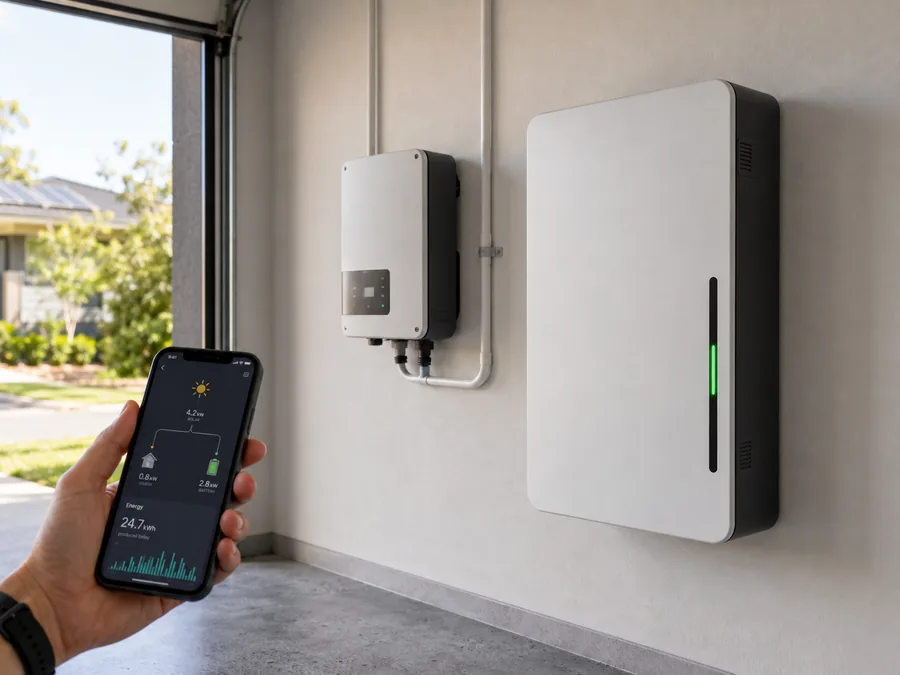
- Start with your evening use. Look at how much power you use between 3pm and 9pm and overnight. That's the load a battery should cover.
- Mind the 10 kWh WA cap. The state rebate maxes out at 10 kWh, while the federal discount stays at full value up to 14 kWh, so batteries of about 10 - 14 kWh get the most from both programs.
- Check your solar can refill it. A battery only helps if your panels have surplus to charge it. Many older 3 - 5 kW systems may need an upgrade first.
- Think about west-facing panels. Synergy itself recommends west-facing panels to generate more in the afternoon, when the 10c DEBS peak export rate applies.
- Book early. Installer calendars fill up before Christmas, and the federal factor is locked in by installation date.

Get your quote → confirm the battery is on Synergy's Supported Solutions List → sign up for Battery Rewards → lock in an installation date before 31 December 2026 to secure the 6.8 STC factor. Note that once your WA rebate application is conditionally approved, installation must happen within six months or you’ll need to re-apply.
Perth battery rebates: frequently asked questions
Can I get both the WA and federal battery rebates?
Yes. The WA Government says its scheme is in addition to, and designed to complement, the federal Cheaper Home Batteries Program. For example, it notes that a 10 kWh battery receives the maximum $1,300 WA rebate on top of the federal discount.
Do I need to apply for the rebate myself?
No. Your approved vendor applies on your behalf, and the rebate is usually taken off your quote upfront.
I already have a battery. Am I eligible?
The WA rebate covers a new, additional or replacement battery of at least 5 kWh usable capacity, limited to one per property. It can't be claimed for systems bought before the scheme started on 1 July 2025.
How long will the WA scheme run?
Until 100,000 rebates have been paid. The WA Government currently expects it to be available until 2027, but funding is finite.
Will DEBS rates change?
Synergy has confirmed no change to REBS or DEBS buyback rates for 2026: 10c/kWh from 3pm to 9pm and 2c/kWh at other times. The rates are reviewed annually by the State Government.
Can renters or unit owners apply?
Unit-titled properties are eligible if the applicant has the necessary approvals, including from the owners' corporation. The property must be used mainly for residential purposes. Renters can apply with their landlord's prior written consent, and owners of a leased investment property can apply with their tenant's consent. The home also needs an ongoing internet connection.
Lock in your battery before the January step-down
Fusion Sun Solar designs solar and battery systems for Perth homes. We'll size your battery for your evening use, check your eligibility for Perth battery rebates and handle the paperwork, so you can install before the 2027 cut.
- WA Residential Battery Scheme - WA Government
- WA Residential Battery Scheme - Eligibility Requirements
- WA Residential Battery Scheme - Information for Applicants
- Solar batteries (STC factors and taper) - Clean Energy Regulator
- Cheaper Home Batteries Program - DCCEEW
- Battery rebates are changing 1 May 2026 - Clean Energy Regulator
- Quarterly Carbon Market Report, March Quarter 2026 - CER
- Synergy Rates & Tariffs 2026
- Synergy - Solar credits, REBS & DEBS
- Synergy - Battery Rewards FAQs
Figures current as at 16 October 2026. This article is general information only. Check eligibility with your installer and retailer.