
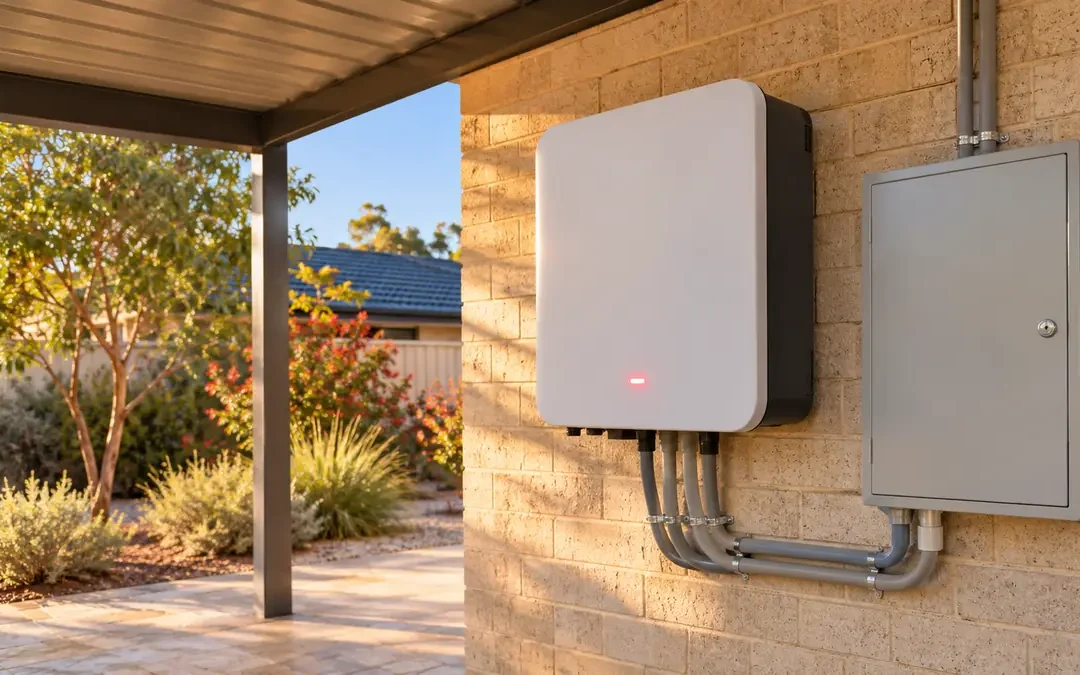
Inverter Fault Light Checklist: What to Check Before Calling an Installer
A safe, step-by-step guide for Perth and WA homeowners whose solar inverter is showing a red or orange warning, covering grid voltage trips, summer heat, dust, coastal salt and Emergency Solar Management.
Book a Solar CheckRead the FAQs
Short answer: an inverter fault light means your system has paused or limited itself to stay safe, and many alerts clear by themselves. Before you call anyone, note the colour and any code, check the time of day and weather, look at your monitoring app, confirm nothing has tripped at the switchboard, and see whether the unit sits in direct sun or has blocked vents. Look up the exact code in your manual, because some codes need prompt professional help. If the alert persists, keeps coming back or points to an electrical safety issue, call a licensed electrician or licensed electrical contractor with solar experience. If you see smoke or flames, get everyone to safety and call 000. Never open the inverter or touch the DC isolators.
What an Inverter Fault Light Is Telling You
Your inverter is the box that turns the direct current (DC) from your roof panels into the alternating current (AC) your home uses. It also watches the grid, its own temperature and the health of the wiring every second. When any reading drifts outside safe limits, the unit stops exporting or cuts its output and switches on a warning lamp or shows a code on its screen.
The Australian Government's energy advice site, energy.gov.au, notes that your inverter may show a fault code when there is an issue, and that lower than usual generation on a sunny day is a sign something may be wrong. So an inverter fault light is a message, not always a breakdown. Reading it calmly can save you a call-out, or help you give your installer the details they need to fix it on the first visit.
Common Inverter Fault Light Colours and What They Usually Mean
Colour schemes differ between models, and many units have several indicators, each with its own job. A red communication lamp, for example, can mean a lost internet link while the inverter keeps producing power. Treat this table as a general guide only, then check which indicator is lit and match the exact code in your manual or app.
| Light or display | What it usually means | Your first move |
|---|---|---|
| Steady green | Normal operation, feeding power | Nothing to do |
| Flashing green | Starting up, waiting for enough sunlight, or syncing with the grid | Wait, especially at dawn or dusk |
| Orange or yellow | Warning: limited output, communication loss or a minor fault | Note the code and check the app |
| Steady or flashing red | Often a fault that has stopped production, though on some models it marks a communication or other indicator | Record the code, run the checklist below |
| No lights at all | No supply from panels (night) or AC side, or a dead unit | Check the time, then the switchboard |
General guide only. Codes and colours vary by model; always confirm with your manual or your installer.
Error types you are most likely to see
| Error type | Typical cause in WA homes | Owner can check? |
|---|---|---|
| Grid overvoltage or "AC voltage high" | Street voltage pushed up by many exporting rooftop systems | Yes, note the times it happens |
| Grid lost or "no utility" | Power cut, tripped solar breaker, or retailer remote switch-off (backup-capable battery systems may keep some circuits running) | Yes, check the switchboard and outages |
| Over temperature or derating | Afternoon sun on the unit, blocked vents, hot summer days | Yes, look for shade and airflow |
| Isolation or earth fault | Damaged cabling, moisture or a failing panel | No, call a licensed electrician |
| Communication or Wi-Fi fault | Router change, weak signal, app login issue | Yes, restart the router |
| Internal hardware fault | Component failure inside the inverter | No, warranty claim via your installer |
Safety First: The Rules Before You Touch Anything
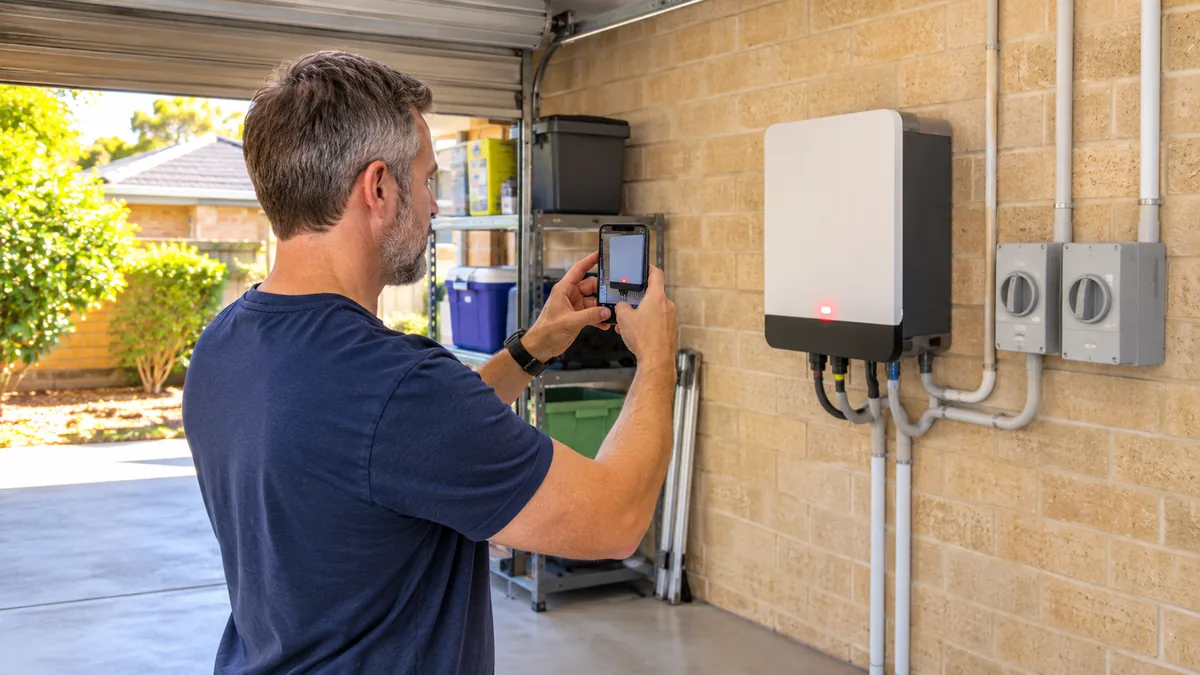
Before you respond to any inverter fault light, remember that solar systems carry high voltage on the DC side whenever daylight hits the panels. Building and Energy WA's guidance on solar PV systems is direct: never attempt electrical repairs yourself, and remember that panels keep generating voltage in daylight even when the main power is off or the system has been shut down.
If you do need to shut the system down, follow the written procedure fixed at the inverter or main switchboard. The same guidance warns that skipping steps can damage the system, and that you should not try to switch anything off if a component is visibly damaged.
Never do these yourself
- Open the inverter cover or remove any panel or screw
- Operate, open or bypass the rooftop or wall-mounted DC isolators unless the posted shutdown procedure tells you to
- Climb on the roof, or go into the ceiling space near solar cabling
- Hose or spray the inverter, or clean panels from a ladder
- Reset the unit over and over when it keeps tripping
DC isolators deserve extra respect. A Building and Energy alert describes them as the source of many fires and the leading cause of failure in solar PV installations. Several isolator brands have been recalled in WA, so if you are unsure which type you have, ask your installer to confirm.
Step-by-Step Inverter Fault Light Checklist
Work through these steps in order whenever an inverter fault light appears. Most take less than a minute and none require tools or opening any equipment.
- Photograph the display. Capture the light colour, the full code or message, and the date and time. Installers diagnose far faster with a clear photo.
- Check the clock and the sky. Lights often flash at sunrise, sunset or under heavy cloud while the unit waits for enough power. If it is early morning and the code is not a safety fault, check again once the sun is higher.
- Open your monitoring app. Compare today's output with a similar sunny day. The government's solar care advice treats lower than normal output on sunny days as the key sign of trouble.
- Check for a power cut. Standard grid-connected solar stops generating when the grid goes down, a safety feature called anti-islanding. A battery system configured for backup may keep chosen circuits powered while cut off from the grid. Check the Western Power outage map before anything else.
- Look at the switchboard. Look, without touching, to see whether the solar supply main switch or a circuit breaker has tripped. If you do not know why it tripped, ask your installer or a licensed electrician before resetting it. Never operate switchgear that looks damaged.
- Visually check ventilation and sun exposure. Is the unit in full afternoon sun, or are its vents blocked by boxes, plants, dust or cobwebs? Do not touch the casing to judge its temperature. Building and Energy WA lists clear cooling vents as part of normal maintenance.
- Note when it happens. A pattern of trips around midday on mild, sunny days often points to high grid voltage, not a faulty inverter.
- Check your Wi-Fi. If the only problem is a communication light, restart the router and check the app login.
- Read the code in the manual. Many codes are labelled "grid side" faults that clear automatically once conditions settle.
- Decide. If the code calls for professional inspection, book it now. If a minor alert clears and output returns to normal, keep an eye on the app. If not, use the table in the next section to decide who to call.
Perth and WA Causes of an Inverter Fault Light
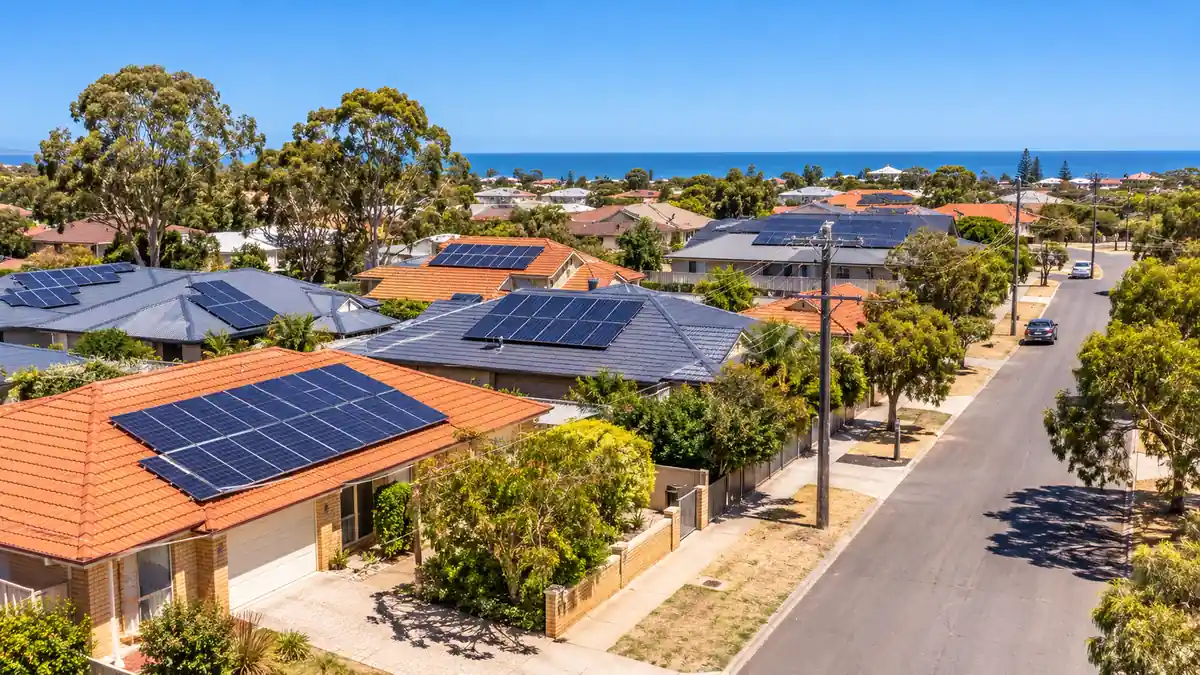
Western Australia's grid and climate create a few patterns you will not read about in a generic manual. Knowing them can stop you paying for a call-out when the inverter is simply protecting itself.
High grid voltage on sunny afternoons
To push power out, an inverter has to lift its output slightly above street voltage. Western Power's customer help page says high voltage can make an inverter shut off generation, and Western Power's basic connection technical requirements set the sustained overvoltage limit at 258V, alongside a required volt-watt mode that reduces output as voltage rises. In practice an inverter may cut back output or disconnect for a while, and the exact behaviour depends on the model, its grid settings and voltage rise in the home's own wiring. When many homes on one street export at once, this can happen repeatedly. Western Power asks that an electrician first confirms the high reading is on the grid side of the meter, then reports the verified reading to its faults line on 13 13 51.
Emergency Solar Management switch-offs
Since 14 February 2022, new and upgraded systems with inverters of 5kW or less have needed to be capable of remote management, and under rules that began on 1 May 2026, the updated WA solar and battery rules extend this to new and upgraded systems on standard connections. Every such system must pass remote management capability testing at installation; owners who later choose not to keep it connected run under a fixed 1.5kW export limit, as Energy Policy WA's consumer information explains. During an event your solar is turned down or off while your home keeps drawing grid power, and this may happen with no fault light at all because nothing is wrong with the equipment. Energy Policy WA describes it as a last resort, so it is rare, but a stopped inverter on a mild, sunny spring day could be this rather than a fault. Our Emergency Solar Management guide for Perth explains how events work.
Summer heat and direct sun
The Bureau of Meteorology records a mean maximum of 31.9°C in January and 32.1°C in February at Perth Airport. The federal inverter guide says string inverters should not sit in direct sunlight, for better results and longer life. A west-facing wall in a Perth summer can push a unit into thermal derating, which may show as an orange light and a flat afternoon output curve.
Dust, coastal salt and pests
Dust on panels mostly lowers generation rather than triggering a fault, but dust or cobwebs clogging inverter vents can lead to heat warnings. Salt spray in coastal suburbs from Mandurah to Yanchep and spiders or wasps nesting in heat sinks can also speed up corrosion or cause alerts. Building and Energy WA lists corrosion, vermin damage and deteriorated cable insulation among common problems, which is why an annual check by an accredited installer or licensed electrical contractor is recommended.
Safe Owner Checks vs Installer-Only Jobs
When an inverter fault light will not clear, this table sets out the line between what a homeowner can safely do and what by law and good sense belongs to a licensed professional.
| Task | Homeowner | Licensed electrician or accredited installer |
|---|---|---|
| Read lights, codes and app data | Yes | Yes |
| Check for outages and tripped switches | Yes, visually; reset only if you know the cause | Yes |
| Clear boxes, plants and clutter from around the unit | Yes, from the ground | Yes |
| Restart Wi-Fi router or re-pair monitoring | Yes | Yes |
| Follow the posted shutdown procedure in an emergency | Yes, only if nothing is damaged | Yes |
| Measure grid or DC voltage | No | Yes |
| Open the inverter or replace parts | No | Yes |
| Inspect or replace DC isolators and cabling | No | Yes |
| Change grid protection or export settings | No | Yes |
| Clean panels on the roof | No | Yes, as part of a service |
Accreditation also matters for warranties and rebates. The Clean Energy Regulator confirmed that Solar Accreditation Australia (SAA) has replaced the Clean Energy Council as the installer and designer accreditation scheme operator, SAA accreditation sits on top of electrical licensing, not in place of it, so book a licensed electrician or licensed electrical contractor who also holds SAA accreditation.
When to Call an Installer Straight Away
If solar equipment is giving off smoke or shows any sign of fire, get everyone out to a safe place and call 000, as DFES advises for home fires. Do not touch the equipment or try its switches. Other signs mean you should skip the inverter fault light checklist and get urgent professional help:
- A burning smell, scorch marks, buzzing or crackling from the inverter or an isolator, with no fire (keep clear)
- Any isolation, earth or insulation fault code
- Water inside an enclosure, or visible damage after a storm
- A red light that persists, or any code your manual says needs immediate help
- The same fault returning several times a week
- A safety switch or breaker that trips for no clear reason
For an immediate danger, keep clear and call 000. For safety and compliance concerns about an installation, Building and Energy can be reached on 1300 489 099. For warranty issues, your retailer or installer is the first contact. Cover depends on the cause and the warranty conditions, and your Australian Consumer Law rights apply on top of any warranty. The government's warranty guide notes string, battery and hybrid inverters commonly carry 5 - 10 year product warranties, with workmanship cover usually 5 years.
If your inverter is near the end of its life, an upgrade may make more sense than repair. Our guide to upgrading a Perth system with extra panels or a hybrid unit covers the options, and our solar inverter installation service handles string and hybrid units. Before replacing one, check whether your home has single or three phase power, as it affects what you can install.
Keeping Fault Lights Away: Simple Habits
- Glance weekly: a quick look at the app catches an inverter fault light or a dip in output before either costs you export credits. Our Synergy feed-in tariff explainer shows what lost generation is worth.
- Book a regular service: energy.gov.au suggests a service could happen every 2 years, while Building and Energy WA recommends an annual check or the manufacturer's schedule.
- Keep the area clear: no stored items, garden growth or bins against the unit.
- Ask about shade: if the unit faces west, an installer can advise on a compliant cover or relocation.
- Keep paperwork handy: the manual, warranty and installer details save time when a light appears.
Inverter Fault Light FAQs
Why is my inverter showing a red light?
A red inverter fault light usually means the unit has stopped producing power to protect itself. Common causes in Perth are high grid voltage, a tripped switch, overheating or a wiring fault. On some models a red lamp only flags lost communication. Record the code, check it in your manual, and call your installer promptly if it persists, returns or points to a safety issue.
Can I reset my solar inverter myself?
Only by following the shutdown and restart procedure posted at your inverter or switchboard, and only if nothing is damaged and you understand why it stopped. If you are unsure, or the fault returns, leave it and book a licensed electrician.
Is it safe to turn off the DC isolator?
Only if the posted shutdown procedure tells you to and the isolator shows no damage, heat or scorching. Building and Energy WA advises against switching anything off when components look damaged.
Why does my inverter trip on sunny days in Perth?
Often because street voltage rises when many homes export at once. Western Power's inverter settings include a 258V sustained overvoltage limit, and inverters may reduce output or disconnect as voltage climbs. An electrician can confirm the reading and report it to Western Power on 13 13 51.
Could Emergency Solar Management cause a fault light?
It can stop or reduce your solar output for a short time during rare low-demand events, usually on mild, sunny days. Your home still gets grid power, the system returns to normal afterwards, and there may be no fault light because the equipment is working correctly.
Does heat affect my inverter?
Yes. Inverters reduce output to protect themselves when too hot, and energy.gov.au says string inverters should not be exposed to direct sunlight. Shade and clear vents help in a Perth summer.
Is an inverter fault covered by warranty?
It may be, depending on what caused the fault and the warranty conditions. String and hybrid inverters commonly carry 5 - 10 year product warranties, and Australian Consumer Law rights apply as well. Contact your retailer or installer first, and keep photos of the fault code.
Conclusion
An inverter fault light is your system's way of asking for attention, not always a sign of a broken unit. In Perth, many alerts trace back to grid voltage, summer heat, dust or a short Emergency Solar Management event. Photograph the code, run the safe checks, keep well away from DC isolators and the inside of the inverter, and call a licensed professional when a fault persists or anything looks or smells wrong.
Need a Hand With an Inverter Fault?
Fusion Sun Solar's accredited team can diagnose the fault, check your grid settings and advise on repair or upgrade options for your Perth home.
Book a Solar System CheckSources
- Building and Energy WA, Electrical safety at home: Solar PV systems
- Building and Energy WA, DC isolator alert
- Western Power, I have high volts registered on my inverter and/or it keeps tripping out
- Energy Policy WA, New requirements for small-scale solar and battery systems
- Energy Policy WA, How will emergency solar management be used
- energy.gov.au, Look after your solar system
- energy.gov.au, Inverters
- energy.gov.au, Warranties and insurance
- Bureau of Meteorology, Climate statistics for Perth Airport (009021)
- Clean Energy Regulator, Solar Accreditation Australia announced as new accreditation scheme operator
- Building and Energy WA, contact details
- Western Power, Basic Embedded Generator Connection Technical Requirements (2026)
- Energy Policy WA, Requirements for solar and batteries: information for consumers
- DFES WA, During a fire in the home
- energy.gov.au, Batteries (backup supply in a power outage)